
The new book makes the case that kindness is not softness, but one of the most powerful tools for influence, trust and lasting impact.
NEW YORK — In a culture often defined by speed, division and performance pressure, Renee Dutton’s new book, The Kindness Advantage, arrives with a timely message: kindness is not a weakness. It is a strategy.
Dutton’s work challenges the outdated idea that compassion and high performance live on opposite sides of the leadership spectrum. Instead, The Kindness Advantage presents kindness as a form of strength — one that can shape families, organizations, communities and public life.
At its core, the book argues that kindness is not merely a personal virtue. It is a practical force. When used with intention, it can build trust, repair relationships, reduce conflict and create environments where people feel seen, valued and motivated to contribute.
That message has become increasingly relevant as leaders across industries face rising burnout, social fragmentation and a growing demand for more human-centered leadership. The modern workplace, like the culture around it, is searching for models of influence that do not depend on intimidation, ego or constant crisis.
Dutton’s book enters that conversation with a clear proposition: people do not have to choose between ambition and empathy.
They can lead with both.
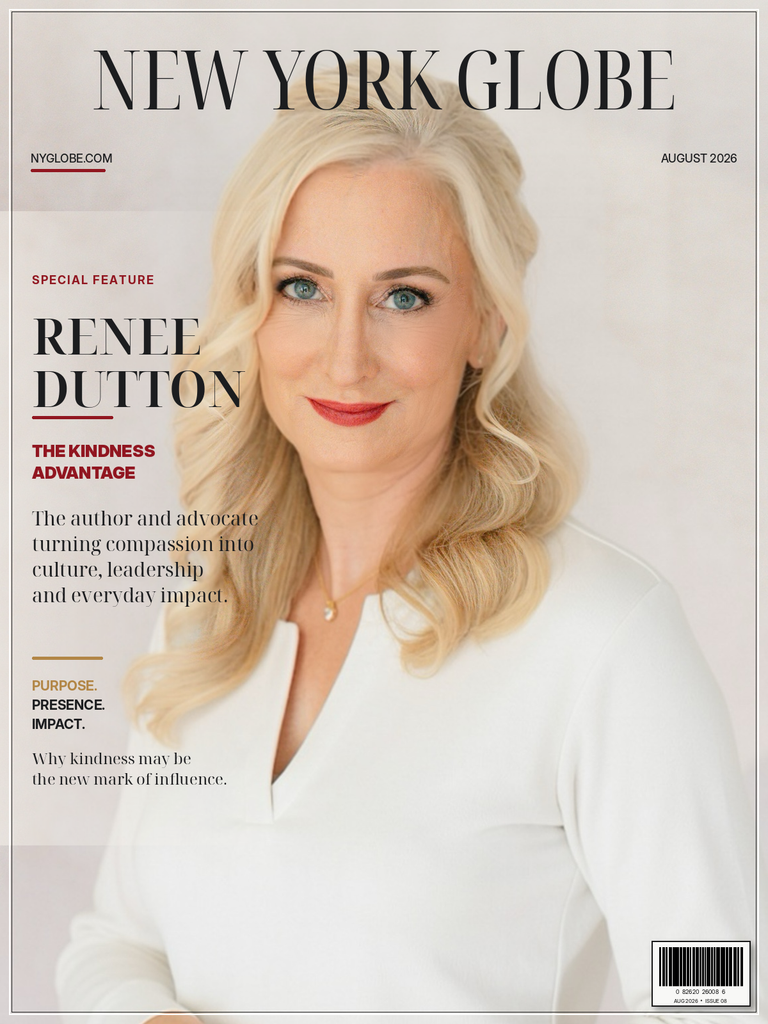
The Kindness Advantage explores how everyday decisions — the words people choose, the patience they offer, the way they respond under pressure — can become defining acts of leadership. Rather than treating kindness as a decorative ideal, Dutton frames it as a discipline. It is something practiced, repeated and strengthened over time.
The book’s central idea is simple but powerful: kindness creates leverage because it earns trust. In business, education, family life and public service, trust remains one of the most valuable currencies a person can possess. Without it, authority becomes fragile. With it, influence becomes deeper and more durable.
Dutton’s approach is not naïve. The Kindness Advantage does not suggest that kindness means avoiding accountability, ignoring difficult conversations or allowing poor behavior to continue. Instead, it presents kindness as a higher standard — one that requires clarity, courage and emotional maturity.
That distinction is important.
In a world where kindness is sometimes mistaken for passivity, Dutton’s book positions it as an active choice. It asks readers to consider how they can remain principled without becoming harsh, confident without becoming dismissive and successful without losing their humanity.
The result is a book that speaks to a wide audience: executives seeking stronger cultures, parents hoping to model better behavior, educators working to inspire students, entrepreneurs building teams and individuals trying to navigate a divided world with more grace.
Its message is also broader than personal development. The Kindness Advantage reflects a larger cultural shift toward leadership models rooted in emotional intelligence, purpose and social responsibility. The leaders most likely to endure are not always the loudest voices in the room. They are often the ones who understand how to create belonging, loyalty and meaning.
Dutton’s book suggests that kindness may be one of the most underestimated forms of power.
That idea is especially resonant at a time when public discourse has become increasingly combative. Many people are exhausted by environments that reward outrage and performance over sincerity and connection. The Kindness Advantage offers an alternative: a way of moving through the world that is both strong and humane.
The book encourages readers to think about kindness not only as something expressed in major moments, but as something built through small, consistent actions. A thoughtful response. A respectful disagreement. A willingness to listen. A decision to help someone feel less invisible.
Those moments may appear ordinary, but Dutton’s argument is that they accumulate. Over time, they shape culture.
That is where the book finds its deeper significance.
Kindness, in Dutton’s view, is not simply about being pleasant. It is about creating conditions where people can become better versions of themselves. It is about leadership that lifts rather than diminishes. It is about choosing impact over ego.
In that sense, The Kindness Advantage is not just a book about compassion.
It is a book about influence.
For readers searching for a new model of success — one that does not require sacrificing decency in pursuit of achievement — Dutton’s message is both timely and necessary.
The future will still demand strength, discipline and ambition.
But as The Kindness Advantage reminds us, the strongest leaders may be the ones who understand that kindness is not what comes after success.
It may be what makes lasting success possible.

