
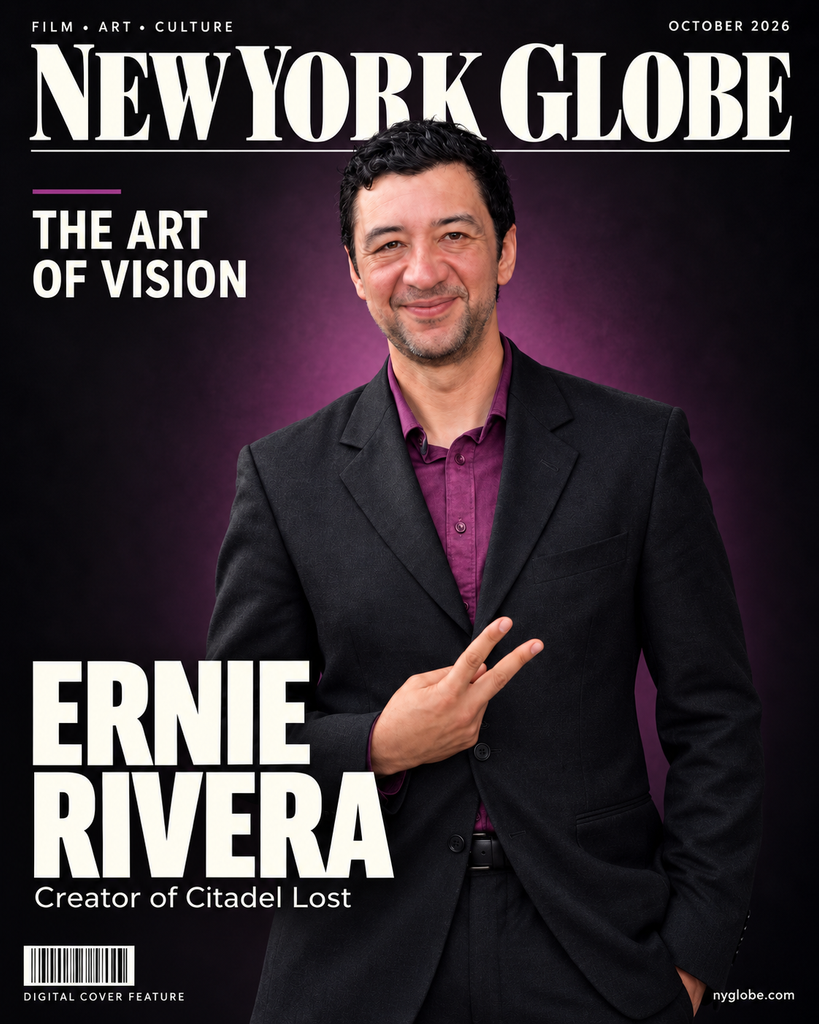
For filmmaker Ernie Rivera, the hardest part of building a creative career has not always been the work itself. It has been continuing when the work seems to go unanswered.
“The biggest struggle was silence,” he explained in an interview.
It is a revealing observation from the Los Angeles–born actor, writer, and director behind Citadel Lost. Before a project finds an audience, its creator must make decisions without knowing whether anyone will care. Rivera’s experience offers a grounded perspective on creative leadership: how to adapt without abandoning a purpose, and how to keep working before recognition arrives.
Finding Another Way Forward
An American actor of Mexican descent, Rivera began performing in his elementary school’s drama club. At 18, he started his professional career with background work on Boston Public at the Paramount studio lot. His early experience included work on Nickelodeon productions such as Drake & Josh, Unfabulous, and Zoey 101, along with music videos and independent film projects.
He later stepped away from working to study acting at Citrus College in Glendora, followed by AMDA College and Conservatory of the Performing Arts in Hollywood.
But training and experience did not eliminate the practical demands of the profession. Acting required him to reserve substantial, unpredictable stretches of time for auditions, often without compensation. Eventually, those demands became difficult to reconcile with his other commitments.
Rivera still wanted to tell stories. Rather than wait for his circumstances to change, he changed how he pursued that ambition.
He began writing.
That distinction matters. His commitment was to storytelling, not exclusively to one role within it. By separating the larger purpose from the familiar career path, he created room to move.
Turning an Idea Into Work
According to Rivera, he completed a polished feature screenplay for Citadel Lost in three weeks. He credits his familiarity with scripts, their formatting, and their conventions, alongside a story he felt compelled to tell.
The speed was unusual, as he acknowledges. The more instructive detail is what followed: sustained work.
Rivera reported that the screenplay earned wins and placements at festivals qualifying for the Academy Awards and Canadian Screen Awards. He also wrote a second feature screenplay, Greymen, and filmed a Citadel Lost proof of concept that entered festival competition.
Those developments reflect a progression from an idea to material others could evaluate. A screenplay could be read. A proof of concept could be watched. Each step gave the vision a more concrete form.
For creative leaders, that is an essential responsibility. Enthusiasm can attract interest, but tangible work gives collaborators something to understand, question, and build upon.
The Human Stakes of Genre
Rivera describes his specialty as grounded genre filmmaking: stories that use science fiction, action, or horror to bring human relationships and needs into sharper focus.
His interest lies particularly in redemption through choice and sacrifice. Change, in his storytelling, carries a cost.
That approach provides a useful lens for understanding his own career decisions. Moving from acting toward writing meant adjusting his expectations and taking responsibility for a different kind of work. It gave him more agency, but also placed the burden of creating the story directly in his hands.
His continuing interests in science and engineering sit alongside his commitment to acting and film production, suggesting a curiosity that extends beyond a single discipline.
Working Before the Applause
Rivera’s account is candid about the emotional difficulty of working without validation. He compares it to repeatedly sending a signal and waiting for a response.
His advice is to keep showing up—but to understand why.
“If you only do it for applause, it can be exceptionally difficult to keep the mission going.”
There is no guarantee that persistence will produce the outcome a creator wants. Yet Rivera’s experience illustrates what persistence makes possible: another draft, another project, another opportunity for the work to be seen.
The leadership lesson is not simply to endure silence. It is to remain productive within it—to adapt, develop the craft, and turn conviction into something tangible.
For Ernie Rivera, Citadel Lost represents that choice: a filmmaker finding a way forward when the familiar path no longer fit.
Ernie Rivera: The Discipline Behind Creative Vision
For filmmaker Ernie Rivera, the hardest part of building a creative career has not always been the work itself. It has been continuing when the work seems to go unanswered.
“The biggest struggle was silence,” he explained in an interview.
It is a revealing observation from the Los Angeles–born actor, writer, and director behind Citadel Lost. Before a project finds an audience, its creator must make decisions without knowing whether anyone will care. Rivera’s experience offers a grounded perspective on creative leadership: how to adapt without abandoning a purpose, and how to keep working before recognition arrives.
Finding Another Way Forward
An American actor of Mexican descent, Rivera began performing in his elementary school’s drama club. At 18, he started his professional career with background work on Boston Public at the Paramount studio lot. His early experience included work on Nickelodeon productions such as Drake & Josh, Unfabulous, and Zoey 101, along with music videos and independent film projects.
He later stepped away from working to study acting at Citrus College in Glendora, followed by AMDA College and Conservatory of the Performing Arts in Hollywood.
But training and experience did not eliminate the practical demands of the profession. Acting required him to reserve substantial, unpredictable stretches of time for auditions, often without compensation. Eventually, those demands became difficult to reconcile with his other commitments.
Rivera still wanted to tell stories. Rather than wait for his circumstances to change, he changed how he pursued that ambition.
He began writing.
That distinction matters. His commitment was to storytelling, not exclusively to one role within it. By separating the larger purpose from the familiar career path, he created room to move.
Turning an Idea Into Work
According to Rivera, he completed a polished feature screenplay for Citadel Lost in three weeks. He credits his familiarity with scripts, their formatting, and their conventions, alongside a story he felt compelled to tell.
The speed was unusual, as he acknowledges. The more instructive detail is what followed: sustained work.
Rivera reported that the screenplay earned wins and placements at festivals qualifying for the Academy Awards and Canadian Screen Awards. He also wrote a second feature screenplay, Greymen, and filmed a Citadel Lost proof of concept that entered festival competition.
Those developments reflect a progression from an idea to material others could evaluate. A screenplay could be read. A proof of concept could be watched. Each step gave the vision a more concrete form.
For creative leaders, that is an essential responsibility. Enthusiasm can attract interest, but tangible work gives collaborators something to understand, question, and build upon.
The Human Stakes of Genre
Rivera describes his specialty as grounded genre filmmaking: stories that use science fiction, action, or horror to bring human relationships and needs into sharper focus.
His interest lies particularly in redemption through choice and sacrifice. Change, in his storytelling, carries a cost.
That approach provides a useful lens for understanding his own career decisions. Moving from acting toward writing meant adjusting his expectations and taking responsibility for a different kind of work. It gave him more agency, but also placed the burden of creating the story directly in his hands.
His continuing interests in science and engineering sit alongside his commitment to acting and film production, suggesting a curiosity that extends beyond a single discipline.
Working Before the Applause
Rivera’s account is candid about the emotional difficulty of working without validation. He compares it to repeatedly sending a signal and waiting for a response.
His advice is to keep showing up—but to understand why.
“If you only do it for applause, it can be exceptionally difficult to keep the mission going.”
There is no guarantee that persistence will produce the outcome a creator wants. Yet Rivera’s experience illustrates what persistence makes possible: another draft, another project, another opportunity for the work to be seen.
The leadership lesson is not simply to endure silence. It is to remain productive within it—to adapt, develop the craft, and turn conviction into something tangible.
For Ernie Rivera, Citadel Lost represents that choice: a filmmaker finding a way forward when the familiar path no longer fit.

