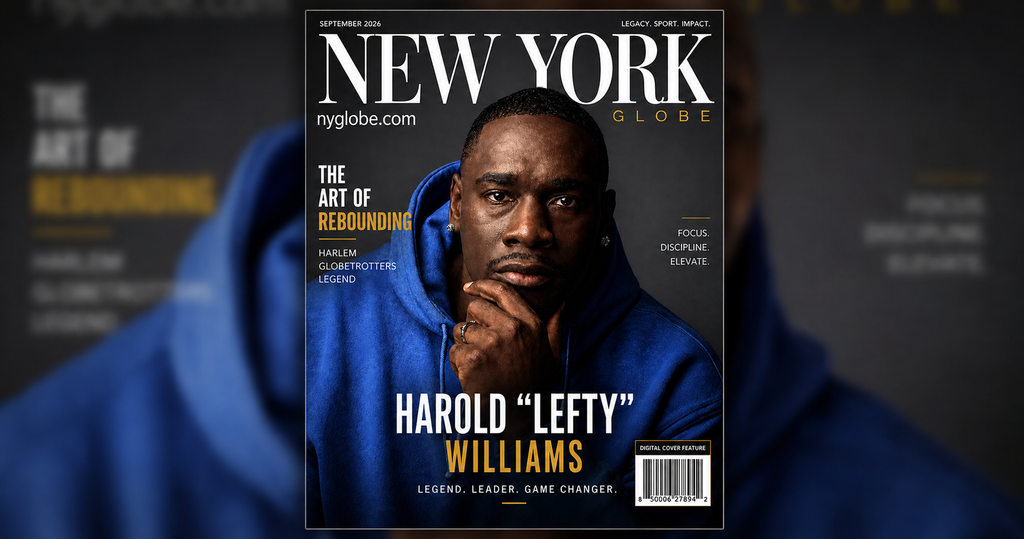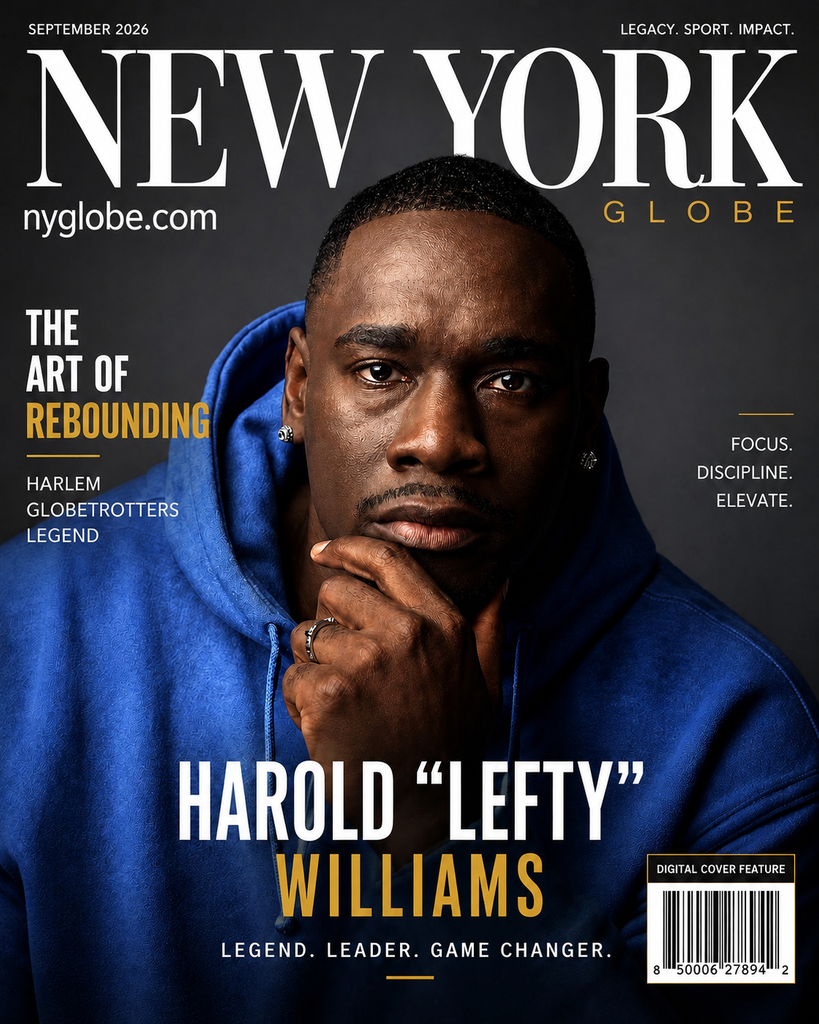
The former Harlem Globetrotter is transforming lessons from professional basketball into a growing platform built around resilience, purpose, family and service.
In basketball, the rebound often determines who controls what happens next.
The same principle applies to leadership. Careers change. Plans fall apart. Opportunities disappear. Even accomplished people encounter moments that force them to reconsider their position and decide whether they will remain defined by what happened or take control of what happens next.
For Harold “Lefty” Williams, rebounding is more than an athletic skill. It is a philosophy for navigating life.
Williams made history as the first left-handed showman in the history of the Harlem Globetrotters and built a 15-year professional basketball career that took him around the world. Today, he is an executive producer, media executive, entrepreneur, philanthropist, author, podcast host and talent manager.
The common thread connecting those roles is his belief that setbacks can become strategic turning points when they are met with the right combination of positioning, persistence and purpose.
That philosophy is at the center of his book, The Art of Rebounding: The Power of Positioning, Persistence and Purpose. Rather than treating resilience as an inspirational slogan, Williams presents it as a discipline that can be developed and practiced.
“Rebounding” in this context does not mean pretending that disappointment did not happen. It means understanding what happened, accepting the reality of the moment and intentionally repositioning yourself for the next opportunity.
It is a message with particular relevance for entrepreneurs and leaders. Success rarely follows a straight line. Markets shift, partnerships change and even the best strategies occasionally fail. The leaders who endure are not necessarily those who avoid adversity. They are the ones who learn how to respond to it without losing their identity, discipline or long-term vision.
Positioning Comes Before Progress
One of the most valuable ideas behind The Art of Rebounding is that recovery begins with positioning.
On the basketball court, rebounds are not won through height or athleticism alone. Players must anticipate where the ball is going, establish their position and remain prepared to act. Leadership demands a similar awareness.
When circumstances change, effective leaders must be willing to examine where they are standing, what they can control and what adjustments the moment requires. Persistence without positioning can become wasted effort. Purpose without action remains only an intention.
Williams brings these principles to life through experiences gathered across professional sports, media, entertainment, business and family. His credibility does not come from observing adversity at a distance. It comes from repeatedly applying the same philosophy while moving between industries and stages of life.
His evolution from professional athlete to executive producer illustrates that principle. Williams contributed to major media projects including Uninterrupted: The Real Stories of Basketball, working alongside LeBron James and Maverick Carter. The experience placed him at the intersection of sports, culture, entrepreneurship and storytelling.
But Williams’ larger ambition is not simply to tell stories about successful people. It is to uncover the struggles, decisions and moments of reinvention that made their success possible.
Turning a Book Into a Conversation
That mission continues through The Art of Rebounding podcast.
The podcast expands the ideas introduced in Williams’ book by bringing them into candid conversations with champions, thought leaders, cultural influencers and everyday people. Guests explore the experiences that shaped them, the obstacles that tested them and the decisions that allowed them to move forward.
In a media environment often dominated by polished success stories, The Art of Rebounding focuses on what frequently gets edited out: uncertainty, disappointment, sacrifice, relationships, faith and personal transformation.
That honesty is part of what makes the podcast valuable. Listeners are not simply hearing what accomplished people achieved. They are learning how those individuals responded when achievement was not guaranteed.
Together, the book and podcast form two parts of the same leadership platform. The book provides the framework. The podcast demonstrates how that framework appears in real lives.
For entrepreneurs, executives, athletes and anyone navigating a significant transition, The Art of Rebounding offers a timely reminder: a difficult chapter does not have to become the final definition of a person’s story.
Leadership That Begins at Home
Williams’ approach to legacy is perhaps most visible within his own family.
Together with his wife, Shyneefa Williams, he is building a family platform rooted in faith, creativity, entrepreneurship and service. As a father and manager, he helps guide the developing Hollywood careers of their three children.
His son EJ Williams voices Lucas in the animated series Stranger Things: Tales From ’85. His son CJ Williams stars as Wade in the film Buddy. His daughter KiKi Williams has lent her voice to Disney’s Moon Girl and Devil Dinosaur and has a novel scheduled for release in 2027.
Shyneefa is also an author. Her book, From Moma’s Kitchen: A Story of Faith, Family and Food, preserves the recipes, memories and values passed down through generations. Its message reflects the family’s belief that legacy is built through everyday spaces where stories are shared, relationships are strengthened and traditions are protected.
This family-centered approach reveals an important distinction in Williams’ definition of success. Achievement is personal, but legacy is collective.
For Williams, leadership is not measured only by the opportunities someone creates for themselves. It is also measured by the confidence, access and values they pass on to others.
Taking the Philosophy Into the Community
Williams and his wife have extended that commitment through the Harold “Lefty” Williams Dare2Dream Foundation, a registered 501(c)(3) nonprofit focused on youth and community empowerment.
Through sports, education, mentorship, motivational programming, leadership development and character development, Dare2Dream helps young people develop the tools and confidence needed to pursue their goals.
The foundation encourages participants to recognize that present circumstances do not have to determine their destination. It is the philosophy of The Art of Rebounding translated from words into community action.
Dare2Dream’s work has received recognition from the Wisconsin Herd, the NBA G League affiliate of the Milwaukee Bucks, for four consecutive years. In February 2026, the organization received dual honors from both the Wisconsin Herd and the Windy City Bulls, the NBA G League affiliate of the Chicago Bulls, for its community leadership and service.
The recognition matters, but the deeper measure of the foundation’s success is the belief it helps instill in young people: that adversity can be confronted, purpose can be discovered and a different future can be built.
The Leader After the Setback
The most enduring leadership philosophies tend to be simple enough to remember but deep enough to apply across different circumstances. Williams has found that kind of universality in the rebound.
His career demonstrates that reinvention does not require abandoning the past. It requires using previous experiences as preparation for a larger purpose.
Basketball taught him how to anticipate, position himself and remain persistent. Media gave him a way to amplify meaningful stories. Fatherhood gave him a deeper understanding of legacy. Philanthropy gave his philosophy a direct connection to service.
Now, through The Art of Rebounding book and podcast, Williams is bringing those lessons together for an audience far beyond the basketball court.
His message is not that every loss can be avoided. It is that no single loss should be given permanent authority over the future.
That may be the defining lesson of Harold “Lefty” Williams’ next chapter: great leaders are not simply people who know how to win. They are people who know how to recover their position, reclaim their purpose and help others rise with them.