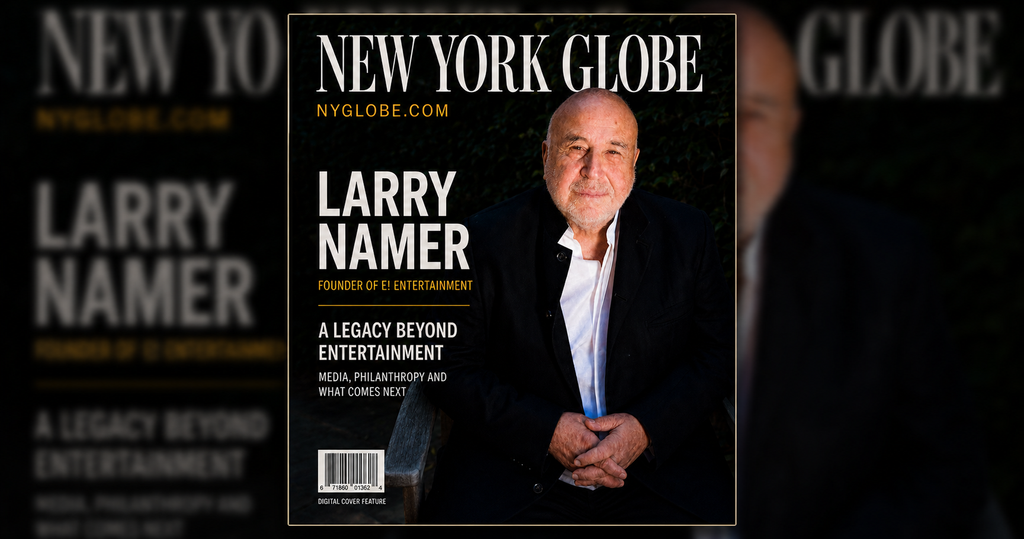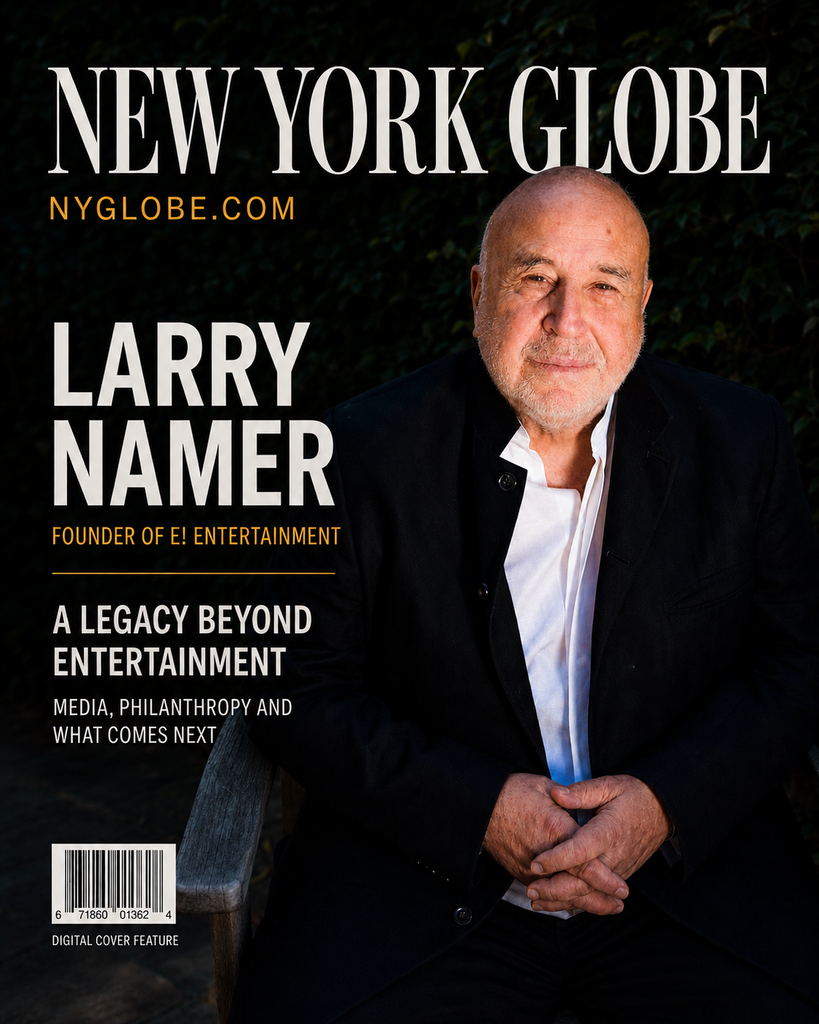
Across more than five decades, the co-founder of E! Entertainment has demonstrated that enduring influence comes not from protecting one success, but from continually building toward the future.
Leadership is often reduced to a single defining achievement. One company. One breakthrough. One moment that changes everything.
Larry Namer’s career offers a more enduring model. His legacy is not built upon one success, but upon his ability to recognize change early, enter unfamiliar markets and continue creating long after he had already earned the right to rest on his accomplishments.
Across more than 50 years in cable television, live entertainment, new media and emerging technology, Namer has remained guided by a simple but demanding principle: the future belongs to those willing to see it before it becomes obvious.
Early in his career, Namer became the youngest general manager of a major cable system when he assumed leadership of Valley Cable TV in Los Angeles. Rather than treating local cable programming as a limited regional enterprise, he approached it as a laboratory for new ideas.
Under his direction, the company earned Emmy and Cable ACE Award nominations, while Forbes recognized its programming model as a national standard for local cable television. In 1989, Namer received the President’s Award from the National Cable Television Association.
Those early achievements revealed a quality that would define his career. Namer did not simply manage existing systems. He looked for the possibilities hidden inside them.
That instinct ultimately contributed to the creation of E! Entertainment Television. As a co-founder of the network, Namer helped recognize that entertainment itself could become the subject of an entire media platform. What began as an ambitious idea developed into an internationally recognized, multibillion-dollar brand.
The larger leadership lesson is not simply that Namer helped build a successful network. It is that he recognized an audience before the industry fully understood that audience existed.
Many leaders spend the remainder of their careers defending the institution that made them successful. Namer continued moving.
Through Comspan Communications, he helped introduce Western forms of entertainment into the former Soviet Union during a period of profound cultural and political change. Through Steeplechase Media, he served as a primary consultant to Microsoft’s MiTV initiative, contributing to the development of interactive television applications before interactive media became part of everyday life.
Each venture required more than business experience. It required the willingness to enter new territory without assuming that yesterday’s formula would work tomorrow.
That same philosophy shaped Metan Global Entertainment Group, which Namer co-founded to develop and distribute entertainment for Chinese-speaking audiences in China and around the world. The company represented more than an international expansion strategy. It reflected an understanding that meaningful global media must respect the culture, language and expectations of the people it intends to reach.
Namer’s work through Metan has included film financing and executive-producing projects across scripted television, crime programming and international travel content. His ventures have also extended into digital lifestyle platforms, including BeautyKween.
In 2023, he joined technology entrepreneur Chris Snook in launching the Academy of Digital Arts, Science and Culture, an initiative connected to emerging areas such as the metaverse and Web3. Whether every new technology ultimately fulfills its earliest promises is less important than the leadership instinct behind the effort: remain curious, continue experimenting and never allow past success to become an excuse for intellectual complacency.
Throughout his career, Namer has received recognition across continents. His honors include the Outstanding Contribution to Asian Television Award, the International Media Legacy Award, the Tribeca Disruptor Award and multiple lifetime achievement awards.
Yet awards alone do not explain his influence.
The deeper measure of Namer’s leadership is the range of worlds he has helped connect: traditional television and interactive media, Hollywood and international audiences, established entertainment institutions and emerging technology.
His career demonstrates that longevity is not simply the result of endurance. It is the result of reinvention.
Enduring leaders remain students even after the world begins calling them experts. They continue asking questions after they have accumulated answers. They enter new rooms, listen to unfamiliar voices and remain willing to build again.
Larry Namer’s story is ultimately not just about the rise of a television network or the evolution of the entertainment business. It is about the discipline required to stay relevant without abandoning the experience that made relevance possible.
The next generation of leaders will face industries changing faster than ever before. Their success will depend not only on what they know today, but on their willingness to keep learning tomorrow.
After more than five decades, Namer’s example delivers a powerful message: achievement may establish a reputation, but curiosity sustains a legacy.