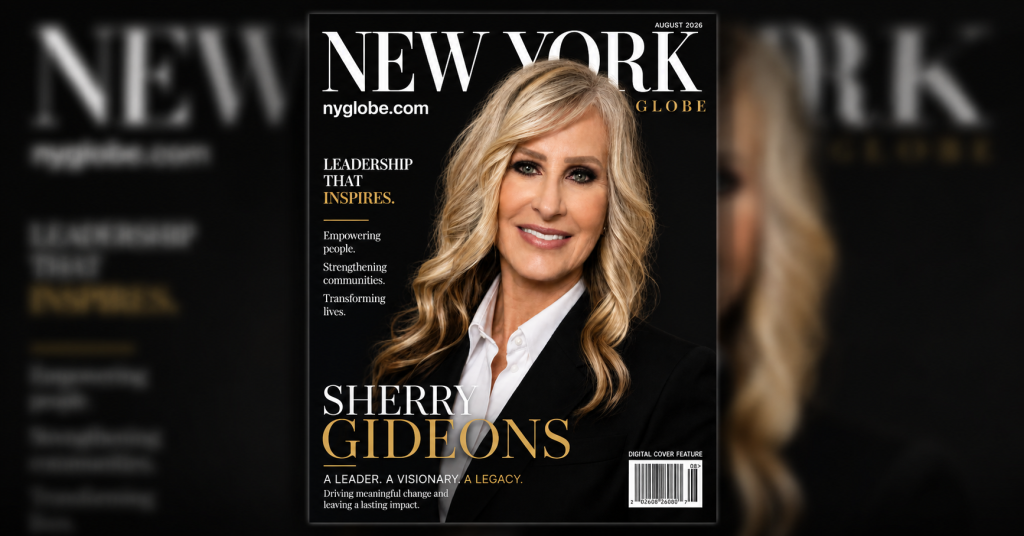
Sherry Gideons: Leadership Shaped by Adversity and Purpose
Leadership is often discussed in terms of influence, achievement and the ability to guide others. For Sherry Gideons, it has been shaped by something more fundamental: survival, transformation and a deeply held conviction that people are capable of becoming more than their circumstances suggest.
Over more than three decades in health, wellness, fitness and personal development, Gideons has built a career around helping people reconsider what is possible for their bodies, their minds and their lives. A former professional bodybuilder and longtime fitness expert, she later expanded her work into coaching, speaking, communications and spiritual development.
Today, her leadership is rooted less in titles than in the philosophy she has carried through some of the most difficult chapters of her life: adversity can either define a person or become material from which a stronger life is built.
That perspective has also informed her work with The Los Angeles Tribune, where Gideons has served for approximately six years and currently works as Communications Director. In that role, she has contributed to the organization’s communications efforts while bringing to the newsroom and broader media platform the same emphasis on human potential, service and purposeful leadership that has defined her personal work.
For Gideons, leadership begins internally.
“I am here to help people of all ages discover their own infinite greatness,” she has said, a statement that captures the central idea behind much of her work.
A Career Built on Discipline
Long before she became a speaker and life mastery consultant, Sherry Gideons established herself in the demanding world of fitness and bodybuilding.
She competed during an era when the fitness industry was rapidly evolving and expectations surrounding performance and appearance could be intense. Her professional background eventually included decades of training across health and wellness, while her studies expanded into metaphysics, communications and the relationship between mindset and personal transformation.
Those experiences gave her an unusual perspective on leadership.
Physical discipline taught her consistency. Competition taught her resilience. Coaching taught her that people rarely change simply because they are given information; meaningful transformation often requires changing the beliefs and habits through which they see themselves.
Yet Gideons’ most significant leadership lessons would not come from competition.
They would come from circumstances that forced her to reconsider almost everything she believed about strength.
Sherry Gideons: When Strength Became Something Different
Gideons has spoken openly about earlier struggles involving body image, eating disorders, substance abuse and low self-worth during her years in the competitive fitness world.
By the late 1990s, those struggles collided with a life-threatening medical crisis.
On February 13, 1997, Gideons experienced what she describes as her first near-death experience following a heart attack. The event became a turning point.
Rather than returning immediately to competition, she stepped away for several years and began addressing what she has described as the wounds beneath the surface — the internal issues that physical achievement alone had never resolved.
Her eventual return to fitness in 2000 represented something different from her earlier career. She returned with a greater focus on health, self-respect and alignment between internal well-being and outward performance, eventually achieving professional status while competing naturally.
Then came another crisis.
In 2004, following the delivery of twins, Gideons suffered another massive heart attack. She recalls being told that she faced an extremely serious prognosis, including the possibility of needing a heart transplant and severe limitations on future physical activity.
The experience could have ended the story she had spent years rebuilding.
Instead, Gideons says it reinforced the philosophy that would ultimately define her leadership work.
She focused intensely on recovery, visualization, mindset and what she describes as choosing wholeness rather than identifying exclusively with illness. She has said that in the years that followed, her health improved dramatically.
Her personal account of recovery forms an important part of her public message, though the broader leadership lesson she draws from it extends beyond any single health outcome.
It is about agency.
At moments when circumstances appear to dictate the future, Gideons believes people must still ask what remains within their control: their response, their perspective, their discipline and the meaning they assign to what has happened.
Leadership Begins With the Self
One of the recurring themes in Sherry Gideons’ work is that leadership cannot be separated from self-leadership.
People often attempt to support families, organizations, clients and communities while neglecting their own physical or emotional well-being. Gideons argues that this eventually creates an unsustainable model of service.
Her philosophy is that people should learn to give from strength rather than depletion.
That idea has become increasingly relevant to modern leadership. Executives, entrepreneurs and professionals are frequently rewarded for endurance, constant availability and relentless production. But without self-awareness, those qualities can become liabilities.
Gideons’ approach asks a more difficult question: What kind of person is being created beneath the accomplishments?
She encourages people to examine their thoughts, emotional patterns, habits and sense of self-worth, particularly when those internal patterns contradict the life they say they want to build.
For Gideons, leadership is not merely about directing others.
It is about becoming sufficiently conscious of oneself that one’s example becomes credible.
Turning Experience Into Service
Sherry Gideons’ work today spans speaking, coaching and mentoring, with an emphasis on whole-person development.
She has addressed audiences on subjects including wellness, personal transformation, body image, mindset and human potential. Her message often draws directly from her own experiences rather than presenting leadership as an abstract theory.
That distinction matters.
People are more likely to trust leaders whose principles have been tested under pressure.
Gideons does not speak about adversity from a distance. Her philosophy emerged from experiences involving physical crisis, deeply rooted self-image struggles and personal reinvention.
She has said that surviving two near-death experiences changed her understanding of what deserves attention.
The lesson, in her view, is not that difficulty can always be avoided. It is that individuals retain a meaningful degree of choice in how they meet it.
That mindset has informed her coaching as she encourages others to become more deliberate about the lives they are constructing.
Sherry Gideons: Leadership Through Communication
Her role with The Los Angeles Tribune adds another dimension to that work.
Over approximately six years with the organization, Gideons has become part of a media institution that increasingly operates across journalism, leadership development, publishing, entertainment and public events.
As Communications Director, her responsibilities place her at the intersection of message, relationships and organizational identity.
Effective communications leadership requires more than promoting an institution. It requires understanding how people perceive it, protecting trust and ensuring that an organization’s external voice reflects its internal values.
Those skills are particularly significant in media, where credibility is among the most important assets an organization possesses.
Gideons’ background in coaching and communications gives her a perspective that is naturally oriented toward people. Her work has consistently focused on understanding what motivates individuals, how people interpret messages and how communication can move someone from uncertainty toward action.
Those abilities translate directly into leadership.
The Difference Between Influence and Leadership
Modern culture frequently confuses visibility with leadership.
The two are not the same.
A person can accumulate an audience without improving the people within it. A person can possess authority without earning trust. A person can achieve extraordinary professional success while remaining disconnected from any larger purpose.
Sherry Gideons’ career points toward a different definition.
Leadership is the ability to help other people recognize greater possibilities in themselves while demonstrating those principles personally.
That requires credibility.
It also requires vulnerability.
By discussing periods of her life that were marked by struggle rather than accomplishment, Gideons removes some of the distance that often exists between speakers and audiences.
Her message is not that successful people never lose their way.
It is that losing one’s way does not have to become a permanent identity.
The Responsibility of a Leader
Perhaps the strongest theme running through Gideons’ philosophy is responsibility.
Not responsibility in the punitive sense, but responsibility as ownership.
She teaches that people must become conscious of the patterns they continually reinforce through their thinking, behavior and relationships.
That perspective can be uncomfortable because it removes the luxury of waiting indefinitely for circumstances to change first.
Leadership demands a different posture.
It asks individuals to determine what they can influence now.
For Gideons, this includes how people care for their bodies, how they speak to themselves, what they tolerate, what they believe they deserve and whether their daily behavior reflects their stated goals.
Her language frequently returns to worthiness — the belief that people are deserving of health, opportunity and what she calls “good and greater good.”
The idea may sound simple.
Living as though it were true is considerably harder.
From Personal Transformation to Greater Impact
Gideons’ evolution from competitive athlete to wellness expert, speaker, coach and communications leader reflects a broader shift in how she defines success.
Achievement remains important, but it is no longer the endpoint.
Impact is.
Her stated goal is to help individuals around the world recognize what she describes as the infinite greatness within themselves and use that awareness to create more meaningful lives.
That mission places her within a growing movement of leaders who see professional accomplishment and personal development as interconnected rather than separate pursuits.
It also explains why her work has continued across multiple industries and platforms.
Fitness was one expression of the mission.
Coaching became another.
Communications and media became another still.
The common denominator has remained the same: helping people move toward a stronger version of themselves.
The Leadership Lesson
The most compelling leadership stories are rarely stories of uninterrupted success.
They are stories of adaptation.
Gideons’ life has included achievement, serious setbacks, reinvention and an evolving understanding of what leadership ultimately requires.
Her experience suggests that leadership is not established by avoiding adversity but by developing the capacity to meet adversity without surrendering one’s direction.
It is built by taking responsibility for the person one is becoming.
It is sustained by service.
And it becomes meaningful when personal transformation is converted into something that helps other people transform as well.
After decades in fitness, wellness, coaching, communications and personal development — including six years working with The Los Angeles Tribune — Sherry Gideons continues to build her leadership around a deceptively simple proposition:
Human potential is greater than most people realize.
The responsibility of a leader is to help them see it.