
At the United Nations, Haitian diplomat and scholar Wisnique Panier has built a career around a single conviction: how you speak matters as much as what you say.
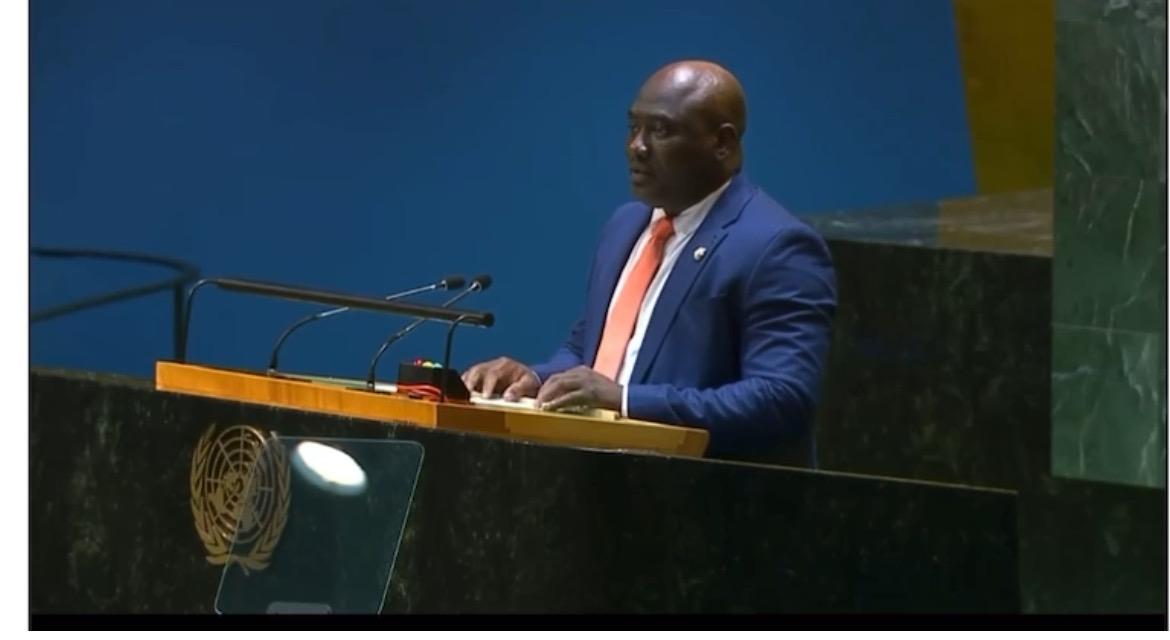
There is a distinct silence that settles over a room at the United Nations moments before a diplomat begins to speak. It is not emptiness. It carries tension, expectation, and consequence. Delegates glance toward the podium. Interpreters prepare their headsets. Entire nations wait to hear how one precisely worded statement may shape negotiations stretching across continents.
Wisnique Panier has lived inside that silence for years.
The Haitian diplomat, scholar, and author has spent much of his career studying the power of language in international affairs, where a sentence can open dialogue, redirect policy, or alter the course of a negotiation. During the 2026 United Nations General Assembly in New York, Panier sat down with the New York Globe to discuss the role communication plays inside the world’s most important diplomatic rooms. He spoke with the precision of a scholar and the patience of someone who has spent years inside those rooms.
“The power of the speech,” he said carefully, “it can build some relationships between state parties, and it can destroy also.”
That reality has followed diplomacy throughout history. Alliances have formed through language capable of creating trust. Conflicts have intensified because of words delivered without precision or restraint. In multilateral diplomacy, communication is not simply presentation. It is strategy, psychology, and leadership operating simultaneously.
Panier understands this because he has spent years examining diplomacy from both the inside and the outside. He serves as Minister-Counsellor at Haiti’s Permanent Mission to the United Nations, where he participates in international legal negotiations, including discussions involving biodiversity beyond national jurisdiction. He also works within the Sixth Committee of the UN General Assembly, the body responsible for legal matters in international governance.
Yet credentials alone do not fully explain the significance of his work.
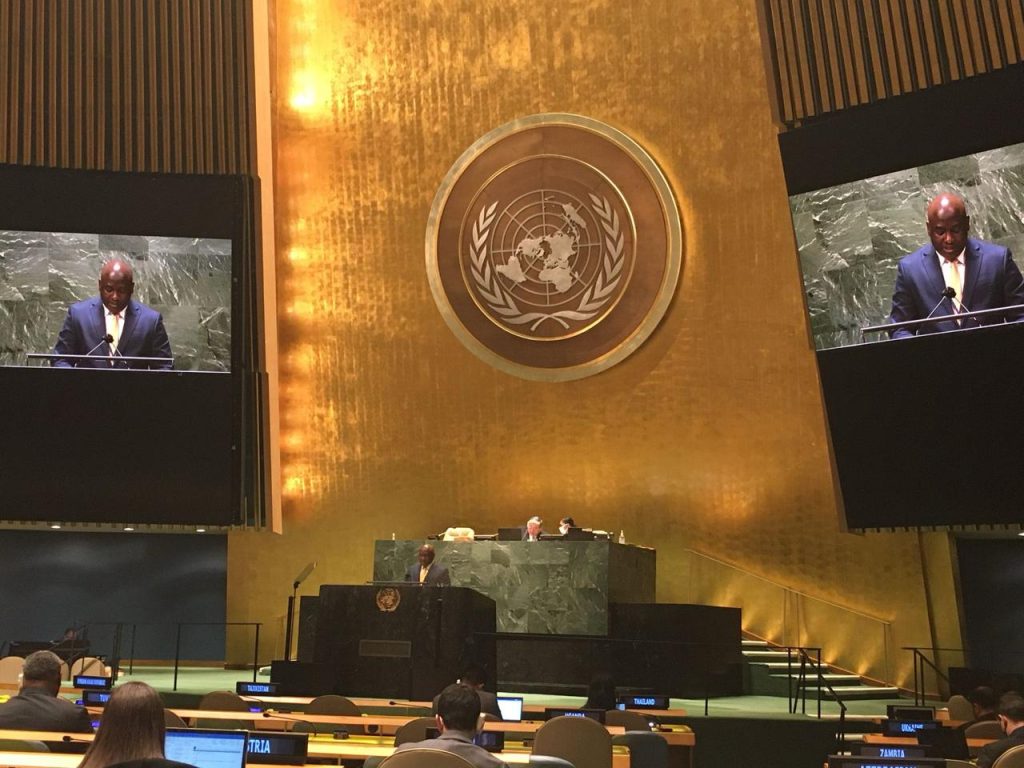
What distinguishes Panier is the way he approaches diplomacy as an exercise in human connection and consequence. He does not view speeches as ceremonial performances designed for headlines. He studies them as instruments capable of influencing emotion, trust, negotiation, and collective decision-making.
That perspective is at the center of his book Diplomatic Voice: A Guide to Multilateral Communication, published by the Common Ground Research Networks, University of Illinois Research Park. Drawing from six years of direct observation at the United Nations, detailed analysis of diplomatic speeches, and interviews with representatives from countries around the world, Panier developed a framework for understanding how communication functions inside multilateral diplomacy.
His work examines not only what diplomats say, but how they say it.
“I try to show how we can write a very good speech,” Panier explained. “All the process, how to pronounce.”
Behind that statement lies years of scholarly precision. Panier studies rhythm, tone, phrasing, pacing, and the emotional architecture of language itself. He explores how certain words create openness while others create resistance. How the cadence of a speech can signal sincerity, caution, or confrontation. How even pauses inside a statement can carry strategic meaning.
Language shapes perception long before outcomes become visible. In rooms where a single phrase can shift the direction of a negotiation, that understanding carries real weight.
That clarity has become increasingly important as diplomatic communication moves faster and demands more from the people delivering it.
Panier’s second major work explores this transformation directly. In WhatsApp in Multilateral Diplomacy: Communication Dynamics and Security Issues, published in English by Springer Nature after its original French release in Canada, he analyzes how digital messaging platforms are reshaping international negotiations.
The subject sounds surprisingly ordinary. WhatsApp is often associated with family chats, social updates, and everyday communication. Yet inside diplomatic negotiations, the application has evolved into a real-time coordination tool capable of influencing governmental decisions within minutes.
Panier described how delegates no longer need to physically leave negotiation rooms to consult with officials back home. A quick message through a diplomatic group chat can bring an entire foreign ministry into a live discussion almost instantly.
“That helps to coordinate quickly, rapidly,” he explained. “That is the change.”
Diplomacy once moved through formal cables, scheduled meetings, and carefully controlled communication channels. Today, discussions evolve continuously through encrypted messaging platforms operating alongside official procedures. Decisions accelerate. Coalitions form faster. Negotiations shift in real time.
At the same time, Panier recognizes the vulnerabilities this new environment creates. Questions surrounding cybersecurity, confidentiality, and information exposure now sit alongside traditional diplomatic concerns.
He neither glorifies technology nor fears it reflexively. He studies how communication systems evolve and how institutions must adapt responsibly.
That discipline traces back to where he began.
Panier grew up in Haiti before continuing his academic and professional path through Canada and France. He earned a Ph.D. in Public Communication from Université Laval and advanced degrees in law and communication from French institutions. Before entering diplomacy, he worked as a journalist and communicator, experiences that taught him how narrative and perception shape the way institutions and publics interpret events.
That background gives his diplomatic work a distinct depth. He understands that global negotiations are not only legal or political processes. They are human conversations shaped by history, identity, emotion, and trust.
For Haiti, that perspective carries particular significance.
Too often, conversations about Haiti focus narrowly on instability or crisis while overlooking the intellectual and diplomatic contributions Haitians continue to make globally. Panier represents a different narrative. One grounded in scholarship, international engagement, and earned credibility.
“It’s like a passion for me,” he said. “It’s a contribution.”
The word contribution appears central to how he sees his work. Not personal visibility. Not status. Contribution.
His books serve not only as academic studies, but as tools for future diplomats, students, and policymakers seeking to better understand how global communication truly operates behind institutional walls. He is helping make diplomacy itself more accessible and understandable to the broader public.
Artificial intelligence, Panier noted, will become one of the defining forces shaping diplomacy in the years ahead. From negotiation strategy to information management and communication systems, AI will fundamentally alter how nations interact. With that transformation comes the urgent need for international policy and ethical regulation.
“Artificial intelligence will change the game also,” he observed. “We’re supposed to make some new policies to regulate. That is a new challenge.”
Technology may evolve rapidly, but humanity remains responsible for the systems it creates.
Near the end of the interview, the conversation returned to peace, the enduring objective behind so much diplomatic labor. Panier had recently participated in the United Nations Harmony Week conference, where leaders and scholars gathered to discuss sustainable development and global cooperation. When reflecting on the experience, he focused less on prestige and more on the significance of people from different nations coming together in shared dialogue.
“All the speeches bring something new,” he said. “We need peace.”
Simple words. Difficult work. Essential work.
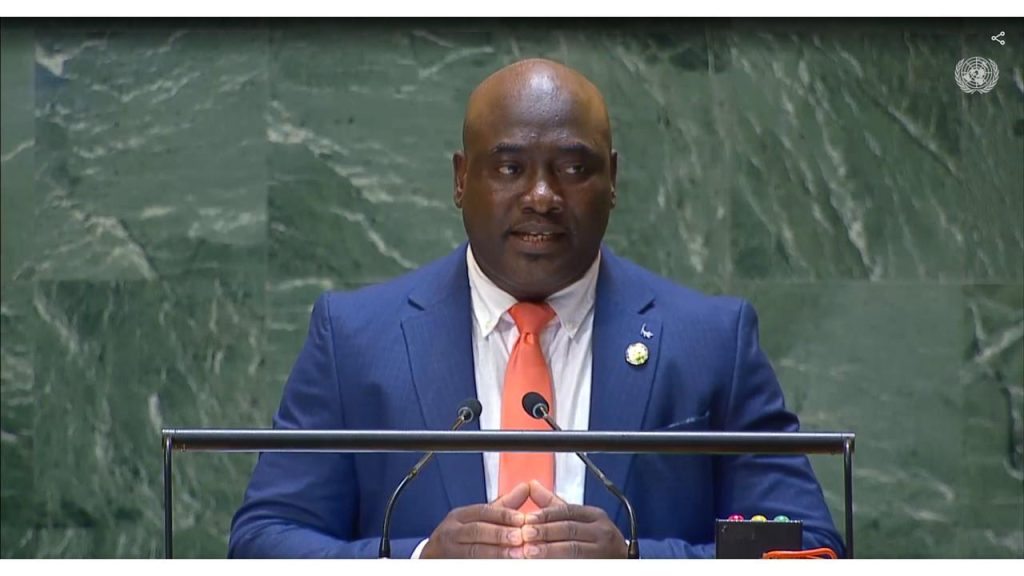
Wisnique Panier has devoted his career to understanding how language can move institutions, influence negotiations, and build understanding between nations that do not always see the world the same way.
And in an era where volume is often mistaken for influence, he offers a quieter and far more enduring reminder: the most powerful people in the room are often the ones who choose their words with the greatest care.

